
37%
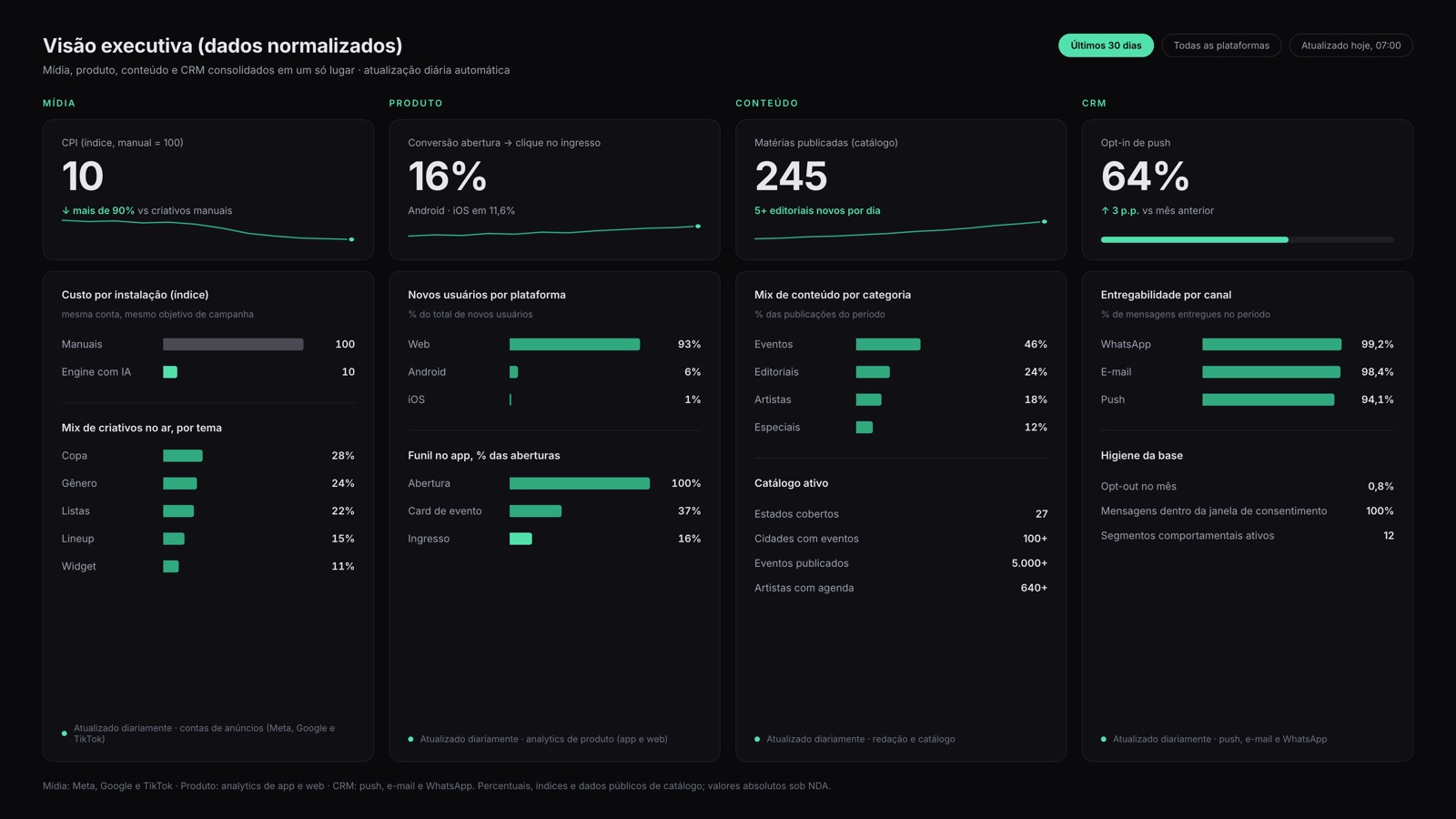
of FESTAS app opens on Android reach an event card click: a funnel measured end to end, with the same number in every tool.
End-to-end implementation and consulting: one central CDP captures each event once and routes it to product analytics, attribution, CRM and your warehouse, with unified identity and a governed taxonomy. Everything measured, nothing on gut feel.
Every tool reports a different number and nobody knows which one is right.
You spend on paid media but can't connect campaigns to what users do inside the product.
Product decisions run on opinion because nobody trusts the events hitting the dashboard.
Web and app are tracked separately, so the same user shows up as two different people.
CRM blasts the whole list because there are no behavioral segments to target.
You need to prove consent (GDPR, LGPD) and can't tell who opted in to what.
We map your current tracking, define the event plan and design the architecture: what gets collected, where it flows and why.
A central CDP instrumented across app and web, destinations configured (product analytics, attribution, engagement, ads, warehouse) and identity unified from anonymous to logged in, with attribution stitching.
A versioned naming convention: snake_case, past-participle event names, required properties like source_section, review for every new event and a 30-day deprecation window.
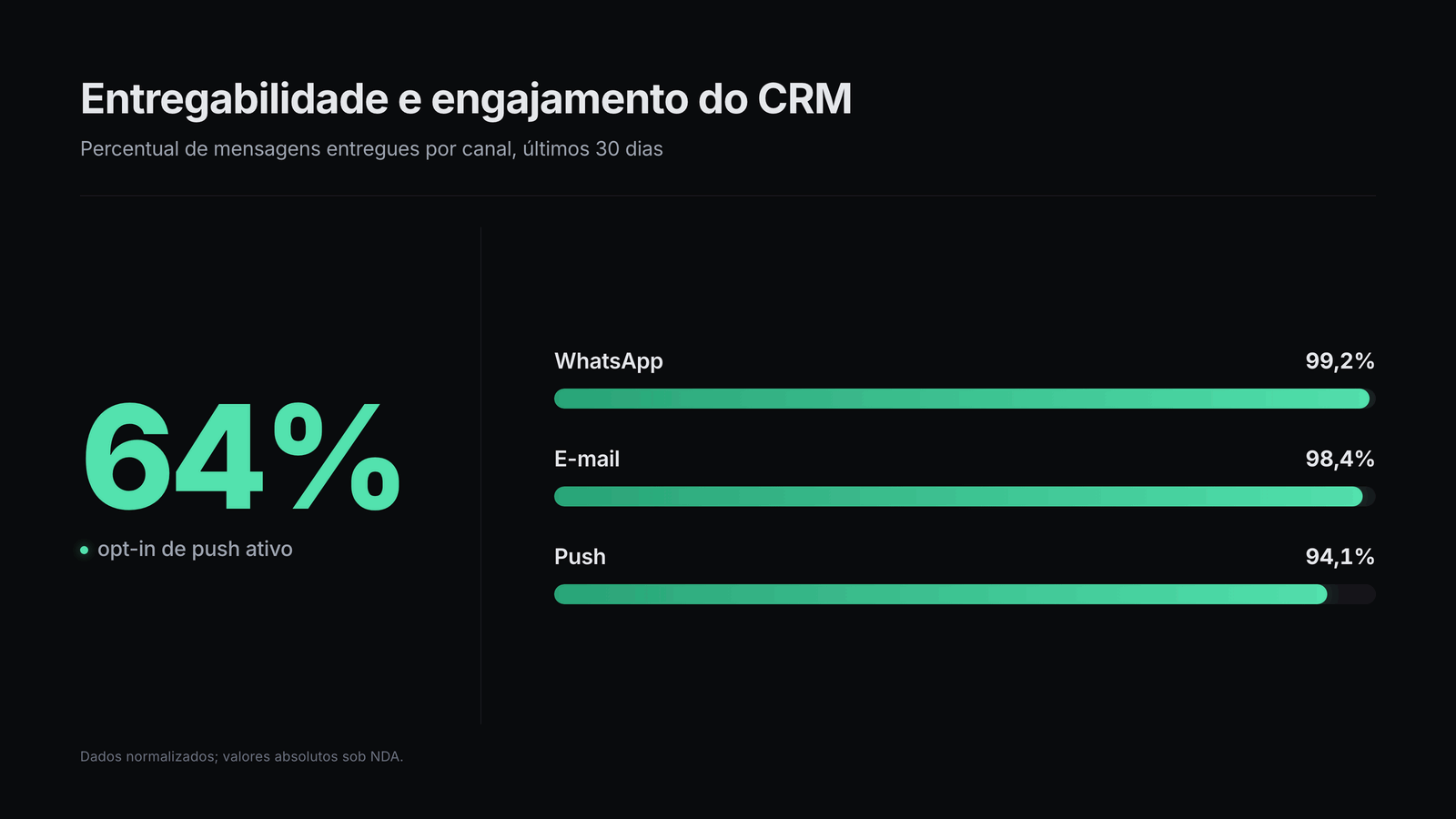
Behavioral segments feeding push, in-app, email and WhatsApp, always consent-based, with per-channel performance measurement.
37%
of FESTAS app opens on Android reach an event card click: a funnel measured end to end, with the same number in every tool.
16%
of Android opens end in a ticket click (11.6% on iOS). Numbers that survive an audit because the collection layer is governed.
90%
drop in cost per install once paid media started deciding with this data, per consolidated app attribution (AppsFlyer).
This is the one page on this site where we open up the entire stack. In analytics, hiding the how is hiding the product: below are the tools we implement, the taxonomy that governs every event and the real funnel from FESTAS, our own product, measured in production.
 Central CDP
 Amplitude
 AppsFlyer
 CleverTap
 Firebase
 Google Analytics
 Meta
Meta BigQuery
An event is captured once and flows to every tool, in real time.
We map your current tracking, define the event plan and design the architecture: what gets collected, where it flows and why.
A central CDP instrumented across app and web, destinations configured (product analytics, attribution, engagement, ads, warehouse) and identity unified from anonymous to logged in, with attribution stitching.
A versioned naming convention: snake_case, past-participle event names, required properties like source_section, review for every new event and a 30-day deprecation window.
Behavioral segments feeding push, in-app, email and WhatsApp, always consent-based, with per-channel performance measurement.
[
  {
    "event": "fssp_tracking_search_executed",
    "properties": {
      "results_count": 42,
      "source_section": "search_bar"
    }
  },
  {
    "event": "fssp_tracking_concerts_ticket_clicked",
    "properties": {
      "event_id": "evt_8f31",
      "source_section": "event_detail"
    }
  }
]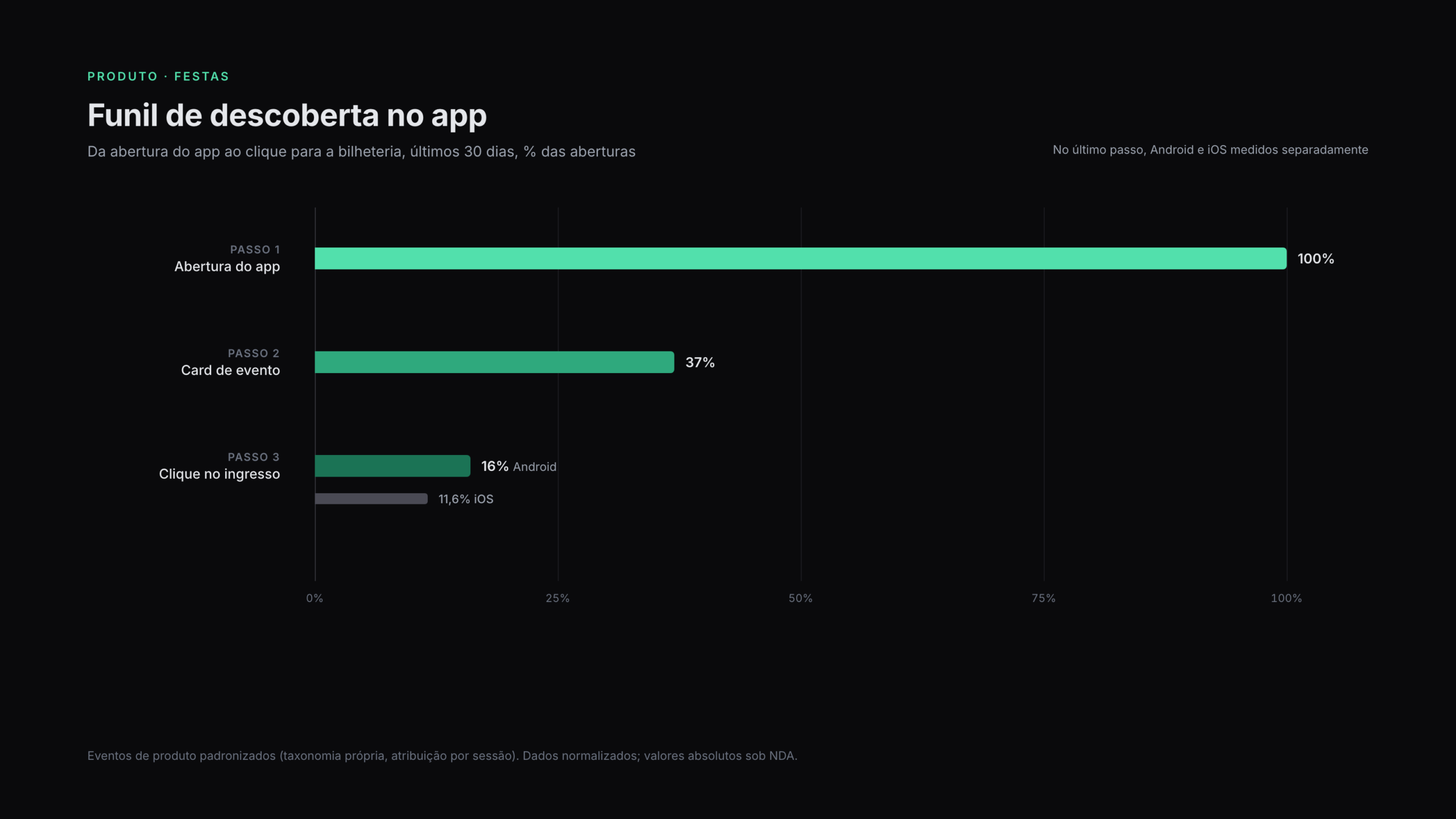
of Android opens reach an event card click, with the funnel instrumented end to end.
of Android opens reach a ticket click, with 11.6% on iOS.
drop in cost per install with creative decisions built on this collection layer, per consolidated app attribution (AppsFlyer).
You do. Everything is set up in your own accounts (CDP, analytics, attribution, warehouse) and we work as admins you can revoke anytime. Zero lock-in: if we part ways, the stack stays yours, fully documented.
It depends on scope: how many platforms (web, iOS, Android), how many destinations and the state of your current tracking. The order never changes: audit and tracking plan first, then instrumentation and destinations, with CRM activation starting as soon as the first segments are reliable. You follow progress event by event, in the tracking plan itself.
Fixed-scope project for the implementation, plus an optional monthly retainer for governance and CRM operations. No per-event fees, no license resale: you contract the tools directly and pay only for our work.
Yes. Architecture matters more than logos: a CDP at the center, a governed taxonomy and the warehouse as source of truth. We only recommend switching tools when there's a measurable reason, never out of preference.
No. We run async-first: a written tracking plan, documented decisions and recorded walkthroughs, plus one weekly call scheduled in your timezone. We work in English, Portuguese and Spanish.
Send us your product context and we'll come back with a diagnosis of your current tracking: what's duplicated, what's missing and the path to a single source of truth.
Talk to Max MCampaign management across Meta, TikTok and Google with structured accounts, data-driven creative and CPI, CPA and ROAS optimization. Our most recent engagement cut cost per install by over 90%.
Explore serviceAI pipelines that turn one real product screenshot into 180+ ad variations, plus agents that research, write, review and publish content. For FESTAS, cost per install dropped by more than 90%.
Explore serviceAI agents pick the topic, produce carousels and voiced reels, write the caption and publish on their own, with automated QA on every piece. Running daily in production on our own accounts.
Explore service